A conflict that can be avoided
- Semere Solomon

- Aug 22, 2025
- 9 min read
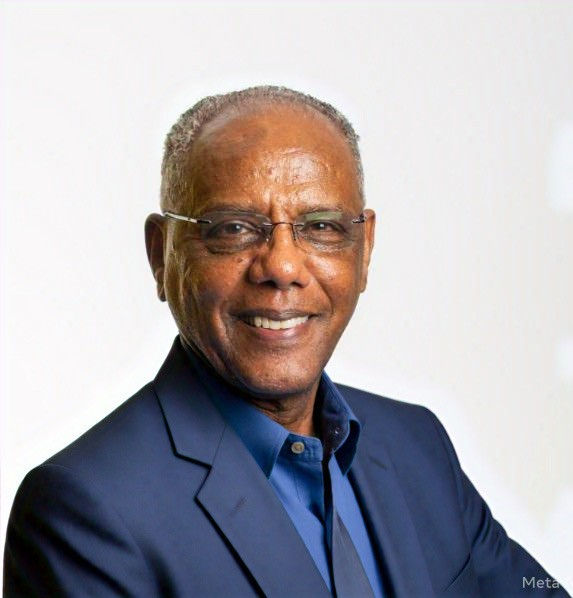
by Semere Solomon
The fluid political developments in the Horn of Africa, if not addressed immediately, will inevitably lead to violent military confrontation. The war drums we hear publicly are echoes of these escalating tensions. Given the sheer number of political actors and their vested interests, the consequences—unless mitigated—will be devastating.
At the forefront of this conflict are the Prosperity Party (PP), the People's Front for Democracy and Justice (PFDJ), and the Tigray People’s Liberation Front (TPLF). Secondary actors include Fano (Amhara resistance forces) and the Oromo Liberation Front (OLF). Other, smaller third-tier political groups could also be part of the conflict in one form or another.
Despite differing political goals and interests, these actors share key similarities, including:-
· Most of the political organizations serve the interests of a narrow political circle, and as such, it is hard to claim that they prioritize the welfare of the people.
· They are plagued by political ambition or shortsightedness (myopia) that prevents them from thinking beyond their own narrow interests.
· They are forces that habitually use coercion against their own people in their respective environments.
· They are forces that do not believe in political pluralism, do not practice inclusive politics, and believe that the solution to political differences is military confrontation.
· Over the past thirty years, the political alliances they formed among themselves were not strategic and, as such, short-lived. They have consistently been prone to shifting. The following alliances can be cited as examples: EPRDF-PFDJ, PFDJ-TPLF, PFDJ-PP, EPRDF-Eritrean opposition forces, PP-Fano, PP-OLF, PFDJ-Anti-EPRDF/TPLF forces in Ethiopia, etc.
· All of them have striven to interfere deeply in the politics of the region to the best of their ability. Moreover, they have served in proxy wars. They have also not refrained from serving regional interests. To cite some examples:
o Eritrea: Eritrea participated as a partner in the military campaign led by the UAE and Saudi Arabia to weaken (if not destroy) the Houthis in Yemen. Through this, it also served the interests of the United States and the West.
o Ethiopia: For decades, Ethiopia has been a member of the UN-sponsored peacekeeping force stationed in Somalia, purportedly to strengthen the security of the region. The primary financier of this project is the United States.
o Turkey and the UAE: In the war that broke out in Ethiopia in 2020 (between PP and TPLF), they played a major role in thwarting the TPLF's counter-offensives by siding with and being partners of PP.
o Eritrea: In the war that broke out in Ethiopia in 2020 (between PP and TPLF), by siding with the PP and being its partner, it launched direct attacks on the TPLF. This is the engagement that PFDJ officials blatantly boast about being invited by PP to take part in the internal affairs of Ethiopia.
o Ethiopia and Eritrea: At various times, they have taken sides and directly or indirectly intervened in the conflict that erupted and continues to this day in Sudan.
o Eritrea in Somalia: It is a verified fact from various information sources that Eritrea at one point provided political and material support to the Al-Shabaab militant group, which was and is active in Somalia. The Eritrean government itself admitted that Al-Shabaab had an office in Eritrea. More recently, it is publicly known that the Eritrean government was training Somali soldiers inside Eritrea in support of the previous and current governments of Somalia.
o Tripartite Alliance of Eritrea, Somalia, and Egypt: It is a public secret that these three countries have formed and are working to create an alliance targeting Ethiopia. The aim of this political alliance is to abort Ethiopia's ambition to achieve maritime ownership in the Red Sea.
Political forces with such attributes cannot be partners for peace, nor can they contribute to the stability of the region. Their history testifies to this. On the contrary, they pose a threat to the area's security themselves. The current political development we are witnessing today is a direct outcome of longstanding political problems and the intransigent behavior of the political actors of the past decades. This can be explained by the following:
The relationship between PP and PFDJ has continued to deteriorate. The intense maritime ownership (not access) obsession driven by PP has created a major fault line in this region. Following the failed attempt in Somaliland, PP has not refrained from making various preparations (diplomatic, political, military) to realize its ambitions. And it continues to do so.
The rift between PP and PFDJ has transcended the issue of maritime access to become one that can be characterized by who has the greatest political influence and, by extension, economic and military influence in the region. We also see them forming political alliances of various kinds to weaken each other. PP has begun collaborating with Eritrean opposition forces abroad to counter PFDJ.
The war that erupted in 2020 between PP and the TPLF over a power struggle (and consequently, the control of resources), although a temporary solution was reached through the Pretoria agreement, the issue has not yet found a political resolution. Land that belonged to the Tigray Region, as recognized by the constitution of the Federal Democratic Republic of Ethiopia, has not been returned to its pre-war status. Displaced Tigrayans have not yet been safely returned to their places of origin. Services in the Tigray Region are not being provided as needed. Representatives of the Tigray Region have not returned to the Ethiopian House of Federation. As a consequence of this, both sides are engaged in a race to advance their conflicting political agendas. The dangerous political game, initiated through a "political engagement" between PFDJ and the TPLF, can be cited as an example. Its negative consequence cannot be overstated and, as such very concerning. So is the tactical political alliance formed between the PFDJ and Fano to undermine PP.
A rift has emerged between the two factions of the TPLF over who should have an upper hand in the politics of Tigray. Both factions, having put the interests of the people of Tigray on the back burner, are currently engaged in an unending race to undermine each other. Furthermore, one faction has allied itself with PP and the other one with PFDJ in an attempt to undermine the other. Because of this new development, we see the aspirations of the people of Tigray being abandoned, and politics driven by deep-seated narrow interests coming to the forefront. As a consequence, the people of Tigray have become victims of the political conflict. And they are divided.
The rift between the TPLF and other opposing forces in Tigray has not ceased. The TPLF has not yet shown a willingness to work with other political organizations, nor does it seem likely in the near future. The opposition forces in Tigray are not happy with the behavior of the TPLF. Neither are the existing civic societies. At this time, we are observing a phenomenon where the political consciousness of the people of Tigray has surpassed that of the TPLF. On the other hand, it vividly demonstrates the political bankruptcy of the TPLF.
The conflict between PFDJ and the Eritrean opposition forces has not found a political solution. PFDJ does not have the political will to set up a government founded on national reconciliation. Nor does it have the political will to establish a constitutional government. The PFDJ does not acknowledge the existence of opposition forces. It is also not willing to release prisoners of conscience. As a result of this policy, the Eritrean people are not happy with the politics of exclusion of PFDJ. It is misleading to assume there is a semblance of political stability in Eritrea, unless it is in name only.
The role of regional powers and the influence they are about to exert should the conflict unfold is a topic that deserves separate analysis. All these regional actors we have mentioned are armed to the teeth. Their economic might is huge. Their ambition is sky-high. And behind them are other global powers. If there is one thing that binds them together, it is their intention to mitigate any turmoil in the Red Sea region. They are willing to go any distance to actualize this goal.
Considering the above facts, it is not impossible to draw some plausible scenarios that might unfold should the situation develop into a full-blown war. These could include the following:-
First, the alignment of forces could change rapidly. One could witness a fluid political relationship between the TPLF and PP. PP’s concessions to the TPLF could end the ongoing "political engagement" between PFDJ and the TPLF. The TPLF has no reason not to lean towards PP should this materialize. If this happens, it could pose a significant danger to PFDJ.
Second, if the political confrontation is not resolved politically and escalates into a full-blown war, there is a possibility that one side could emerge dominant over the other. In such a scenario, the victorious force will have an upper hand in influencing or directing the politics of the region.
Third, if the number of potential stakeholders in the conflict increases, the nature of the war is expected to become more complicated. The duration of the war could also be prolonged. As it drags on, its consequences could become more severe. The resulting human suffering would also be immense.
Fourth, the ongoing political instability in Ethiopia stems from its historical roots and unresolved political grievances that have persisted for decades, if not centuries. Add to this the current political crisis, and Ethiopia could descend into major political chaos. If this phenomenon is coupled with war, its consequences could be severe.
Fifth, the views and interests of external forces, especially those of the regional stakeholders, may play a significant role. The political stance each of them will take and how they respond to the crisis will likely align with their national and regional interests.
But fundamentally, there is one truth one cannot escape. If this conflict erupts, its outcome could be very brutal. Technology will also have a major influence on the outcome of war. Above all, the political landscape of this region will likely change after the war subsides.
Conclusion
Now is a time that demands patience and reflection. This moment, more than any other, requires political wisdom. “The wise man builds fences before the wolf appears,” as the saying goes. All stakeholders must prioritize the welfare of the people and future generations over their deep-seated, narrow political interests. This region, like other regions of the world, needs peace and stability. The path towards development can only be assured after peace is restored.
Seeking to resolve political differences through military confrontation only is an outdated method. It only leads to a dead end. "It is better to negotiate for a thousand days than to spend one day fighting," said Sun Tzu, the great Chinese military strategist. The profundity of this quote highlights that diplomacy, dialogue, and conflict avoidance have a greater advantage over direct military confrontation, which is inherently brutal by nature. This pertains to the forces flirting with war.
The people of Ethiopia and Eritrea also must resist the war that is looming over them. The citizens of both countries who are scattered around the world should knock on the doors of the countries where they reside and present appeals to save the peoples of both nations. This moment requires robust diplomatic work or public diplomacy.
Social media abroad and inside both Ethiopia and Eritrea should refrain from engaging in hate politics and activities, and must work to create frameworks that can open ways to resolve issues through peaceful means of reconciliation. They must not fuel animosity. We must not allow the wars of 1998 and 2020 to repeat themselves.
Neighboring countries and regional bodies like IGAD and the African Union must also exert diplomatic pressure on the forces playing with fire to prevent our region from plunging into deeper darkness.
The international community must also properly understand the gravity of this situation and should call for mechanisms that favor a peaceful solution and pressure the irresponsible forces fueling the conflict.
Fundamentally, the Prosperity Party's intense obsession with maritime ownership (not access to the sea) must be categorically condemned. This ambition has no explanation other than political delusion or arrogance. This war should be condemned as it can easily divert the attention of the people of the region from more pertinent issues such as poverty and democracy. If this war erupts, the people of Eritrea and Ethiopia could become tools of bankrupt politics rather than focusing on their inherent problems.
Instead of fruitless saber-rattling, the Government of Eritrea should engage with forces in the region and the international community to thwart PP’s reckless dreams. This requires extensive and subtle diplomatic work. Somalia's pursuit of the political game that Ethiopia attempted in Somaliland seems to be a plausible one and something that Eritrea can learn from.
Ethiopia’s claim to have access to the sea can only be achieved through dialogue with its neighbors and in the spirit of international law. On the other hand, the focus of the Eritrean people should be on ending the autocracy prevailing in their country. Similarly, Ethiopians must strive to resolve the political problems in Ethiopia through democratic dialogue and peace. Fundamentally, both peoples should build a relationship based on good neighborliness and mutual respect, and strive to become partners of stability and development.


Well thought through!